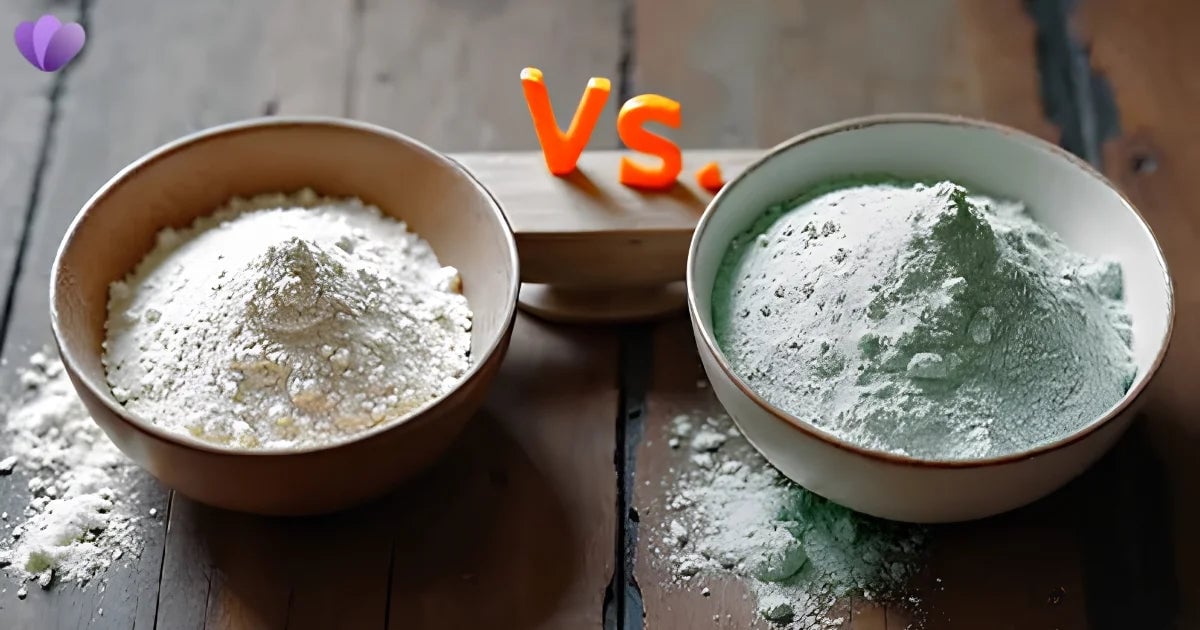
Bentonite clay and zeolite are different natural minerals. Bentonite is a layered clay that can swell in water, while zeolite has a porous crystalline structure. Both can bind certain substances through adsorption and ion exchange, but neither has been proven to provide general whole-body detox benefits in humans.
The main differences lie in their mineral structure, binding properties, and available scientific evidence. Understanding these differences can help clarify their uses, safety concerns, and what to look for when comparing products.
Bentonite Clay vs Zeolite: Key Differences
| Feature | Bentonite clay | Zeolite |
| Common mineral | Montmorillonite | Clinoptilolite is a frequently studied type |
| Structure | Thin, layered sheets | Three-dimensional crystalline framework |
| In water | Certain types swell considerably | Generally retains its framework |
| How it interacts | Surface adsorption and ion exchange | Adsorption and selective ion exchange |
| Common uses | Industrial applications, cosmetics, some oral products | Filtration, agriculture, some oral products |
| Main shopping concern | Grade, contaminants, intended use | Exact mineral type, processing, purity |
They are both aluminosilicate-based, but a similar chemical family does not mean identical behavior. Even two products labeled “bentonite” may differ considerably depending on the deposit and processing.
What Is Bentonite Clay?
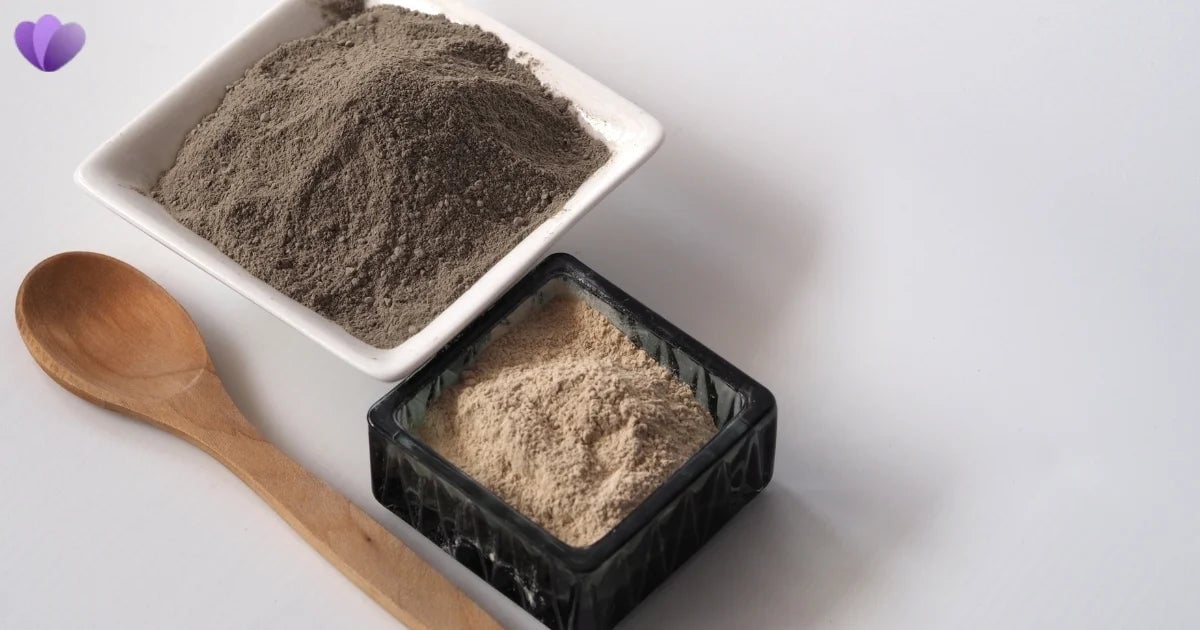
Bentonite forms mainly from the alteration of volcanic ash. Its principal clay mineral is often montmorillonite, whose stacked sheets can hold water and exchange certain positively charged ions.
Sodium bentonite typically swells more in water than calcium bentonite. That distinction matters in manufacturing, but it doesn’t establish which variety is appropriate to swallow. Industrial, cosmetic, and orally marketed clays should never be assumed equivalent.
Bentonite also appears in comparisons with carbon-based ingredients. The differences between activated charcoal and bentonite clay explain why their origins and binding mechanisms should not be confused.
What Is Zeolite?
Zeolites are a family of porous aluminosilicate minerals. Instead of flexible layers, their atoms form ordered frameworks containing channels and cavities. Those spaces can hold water and certain ions.
Clinoptilolite is one natural zeolite frequently discussed in supplement research. However, “zeolite” on a label is not enough information to identify the specific mineral, its purity, or how it was processed.
Some zeolites are made synthetically, and others are mined for water filtration or industrial uses. A filtration-grade mineral is not automatically suitable for ingestion.
For another comparison involving a carbon-based binder, see activated charcoal vs zeolite.
How Do Bentonite and Zeolite Work?
Two terms explain much of the difference: adsorption and ion exchange.
Adsorption means molecules or ions attach to a material’s surface. Absorption, by contrast, means a substance is taken into the bulk of another material, like water into a sponge.
Ion exchange occurs when a mineral swaps certain charged particles with those in its surroundings. The particular ions involved depend on the mineral and conditions such as acidity and competing substances.
Bentonite’s layered structure can swell as water enters the spaces between the sheets. Zeolite’s more rigid framework contains channels with different sizes and affinities. Neither mechanism guarantees that a product will remove a particular substance from the human body.
A laboratory test showing that a mineral binds something in water cannot, by itself, establish the same outcome in a person’s digestive tract.
Bentonite Clay vs Zeolite for Detox: What Does Research Show?
“Detox” is often used as a catch-all term, even though studies typically examine a specific substance, exposure, or medical condition.
Human Evidence for Bentonite
In a randomized trial of refined calcium montmorillonite, researchers enrolled 234 adults in Texas with evidence of dietary aflatoxin exposure. After three months, one treatment group showed a statistically significant reduction in a blood marker of that exposure.
That is an interesting finding for a specific refined clay and a specific food contaminant. It does not show that ordinary bentonite products remove stored heavy metals, treat parasites, or improve general wellness.
Human Evidence for Zeolite
A small randomized trial of purified clinoptilolite studied 30 people with diarrhea-predominant irritable bowel syndrome. Some secondary symptom measures improved, but the main overall-relief response was similar in the treatment and placebo groups after 12 weeks.
The study involved one purified preparation in a defined patient population. It is not proof that zeolite supplements generally cleanse the body.
Which Has Stronger Evidence?
There is no sound basis for declaring a universal winner. These trials tested different formulations, outcomes, and populations, not bentonite against zeolite head-to-head.
Are Bentonite Clay and Zeolite Safe to Use?
“Natural” does not mean contaminant-free. Minerals extracted from the ground can contain unwanted elements, and product quality varies by source and processing methods.
For any product intended for oral use, look for clear mineral identification, lot-specific independent testing, and meaningful limits for contaminants such as lead, arsenic, and cadmium. A seller’s broad statement that a product is “pure” is less informative than actual testing documentation. Ideally, the documentation should identify the tested batch, the laboratory, the test date, and the substances measured. If this information is missing, there’s no reliable way to judge what the product’s quality claims mean.
Digestive discomfort, including constipation or bloating, is possible. Because these materials can interact with substances in the gut, there are also concerns about interference with some medicines and nutrients. The clinical relevance depends on the product and circumstances, so avoid guessing a safe separation interval.
Do not ingest clays sold for crafts, skin care, gardening, or filtration. Pregnant or breastfeeding people, children, and anyone taking medication or managing a digestive condition should seek qualified medical advice before oral use.
Bentonite Clay or Zeolite: Which Should You Choose?
Start with the intended use, not a dramatic claim about toxin removal. If you’re examining a supplement, ask exactly which mineral it contains, how its purity was verified, and whether studies support the claims made for that formulation. The presence of a mineral in a published experiment does not establish that every powder or capsule sold under the same name will behave identically. Formulation, particle size, and testing standards can all differ.
As with other ingredient discussions on Paragon Cleanse, the sensible distinction is between a material’s measurable properties and benefits demonstrated in human research.
Neither mineral is an established replacement for medical evaluation of suspected heavy-metal exposure, persistent digestive symptoms, or a parasite infection.
Final Thoughts
Bentonite clay and zeolite differ in structure, swelling and ion-exchange behavior. Both have been studied in specific contexts, but neither is a proven universal detox solution. Reliable product identification, safety testing, and realistic evidence matter more than broad marketing promises.
Frequently Asked Questions
Is zeolite the same as bentonite clay?
No. Bentonite is typically a montmorillonite-rich layered clay. Zeolites have crystalline frameworks with defined pores. Their properties can overlap, but their structures are different.
Can bentonite clay and zeolite be taken together?
There is insufficient clinical evidence to recommend combining them for routine detox use. Taking both might add unwanted effects or complicate medication timing. Ask a healthcare professional before combining oral mineral products.
Do bentonite clay and zeolite remove heavy metals from the body?
Certain mineral samples can bind metal ions under laboratory conditions. That does not prove that taking them removes metals already stored in human tissues. Suspected exposure requires appropriate testing and medical guidance.
Disclaimer: This article is educational and does not replace personalized medical advice.
Leave a Reply